
.png "Justin Hygate, A Legacy of Leadership and Innovation in the Registry World")
In the world of registries, there are very few people whose name is recognised across continents, systems, and generations. Justin Hygate is one of them.
Known affectionately as The Registry Geek, Justin was awarded the first-ever Lifetime Achievement Award by the Corporate Registers Forum (CRF) just a couple of months ago, one of the highest recognitions our industry has to offer. It was a moment that felt long overdue to many in the registry community, not because Justin seeks the spotlight, but because his influence has quietly shaped how registries collaborate, modernise, and learn from one another for more than four decades.
If you have ever attended a CRF event, worked with an international registry organisation, or been part of a conversation about registries, chances are Justin’s fingerprints are on it somewhere. Often paired with his trademark humour, his impact has always been delivered with generosity, curiosity, and a genuine love for the people behind the systems.
We sat down for a relaxed, wide-ranging conversation, the kind registry people are used to having with Justin at conferences, to talk about where it all began, what has changed, and why registries still matter so much.
Your registry journey started on 21 January 1985. How did you end up in the Companies Office?
At the time, a friend of mine, Alex, and I had both left our studies and were having one of those big conversations about the future. Alex said he wanted to become a specialist. I remember saying, no, I am not interested in that at all. I am going to become a generalist. I just want a job in government, any job really, because I want to protect my weekends and my time. The irony, of course, is that I went on to become a specialist anyway.
I applied for a government role through the State Services Commission simply because I wanted to work in the public sector. The following week, I got a call from someone who said, hi, I am calling from the Companies Office. You probably will not know what that is. And they were right, I did not. They invited me in for an interview, which was with a fantastic district registrar called Lynn Saunders and a lawyer named Robin McDuff. That interview must have gone well because I was offered a role as a supernumerary cadet and started the following week. I had no idea I was starting a 40-year career.
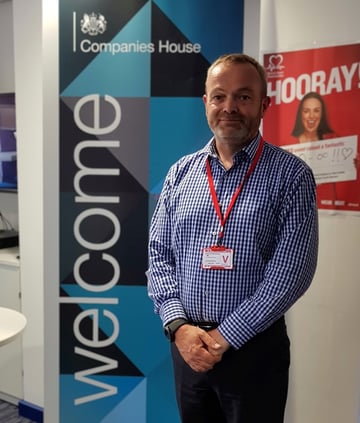
40 years is a long time. What was it like working in a registry before computers and the internet?
Back then, there were twelve Companies Office sites across the country and every single one had a physical filing room, what we called the search room. The hierarchy was the same everywhere, and the search room sat right at the bottom of the building. People assumed that meant it was the least important part of the office, but in reality it was just physics. Those filing cabinets held thousands and thousands of files and paper is heavy, so they had to be downstairs.
The job itself was very hands-on. We would physically pull company files from the cabinets and hand them to search agents, usually people working for law or accounting firms. This was all before email, before fax even, so instructions came in by letter or over the phone. If you were a lawyer in Auckland and needed to search a Christchurch company, you would send instructions down there and a local agent would come into the search room on your behalf.
When I started in 1985, there were not even photocopiers in the search rooms. Agents would sit there and take handwritten notes from the files. Photocopying came later and felt like a big step forward at the time. Looking back now, it is hard to imagine, but that was just how registries worked before computers and the internet changed everything.
Looking back over your career, what change in registries has had the biggest impact on how they operate today?
Access, without a doubt. The biggest change has been the move from fully physical registers to online access. When we first went live with the internet, we still had physical files sitting in places like Christchurch, but suddenly you could sit at your desk in Auckland, pull up a summary of that information, and electronically request for documents to be scanned and sent to you. That was a huge shift. It completely changed expectations around speed, access, and service. From that moment on, registries were no longer local filing rooms, they became national, and eventually global, services. That was the turning point that set everything else in motion.
You spent 27 years in public service. What have you enjoyed most about your time as a public servant?
Companies was always my happy place. I do not mean that lightly. Companies are about new ideas, new growth, and people starting something. Insolvency work, while important, is incredibly heavy. Behind every liquidation is someone’s hopes falling apart, sometimes because of bad decisions or fraud, but often just bad luck. Companies, on the other hand, is about possibility.
I am a systems person. I love processes, structure, and finding better, more efficient ways of doing things. Even back in the paper days, we were constantly asking why we did things a certain way and how we could make them faster, clearer, and more repeatable for customers. That combination of purpose, systems thinking, and continuous improvement is what I enjoyed most, and it is why public service suited me so well for so long.
I was also lucky. I had great mentors like Lynn Saunders and Neville Harris. They were seriously good human beings, very clever, and had a genuine vision for what they wanted. That makes a huge difference in my career.
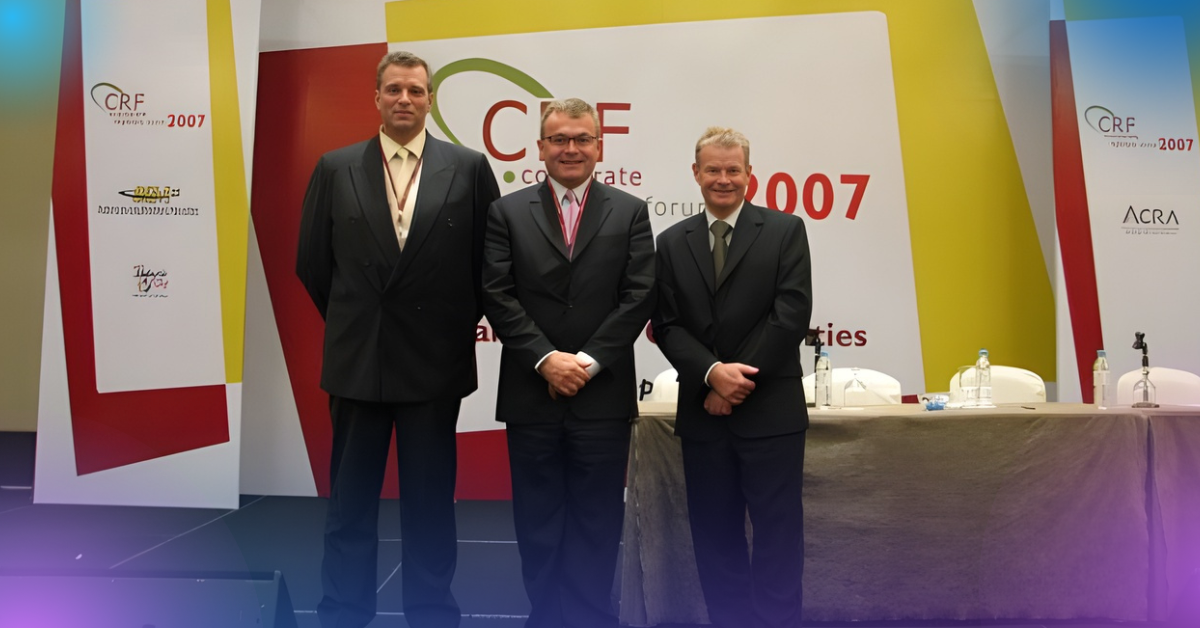 Justin at CRF 2007
You were directly involved in New Zealand’s move to electronic registers. A milestone in the industry. Did it feel revolutionary at the time?
At the time, it definitely felt innovative, although we were mostly just focused on fixing very practical problems. When I started in 1985, everything was paper based. Name approvals were handled through a central mainframe in Wellington and could take months. Once you got a name, you clung to it because you did not want to wait another three months. That inefficiency drove some pretty odd behaviours, like people holding onto company names simply because it was so hard to get one.
The big shift came when we decided we had to stop relying on paper and start using computers properly. We digitised core company information by hand and built systems that could generate certificates and correspondence automatically. That alone was a huge leap. When the opportunity came to put the register online, it just made sense. We were very practical about it. If technology could make things faster, more consistent, and easier for customers, then why would we not use it.
What people forget is how early this was. In the mid 1990s, we were going out to law firms with big laptops and dial-up modems, literally showing partners how to use a computer and access the register online. Many of them did not even have computers yet. We also had touch screen kiosks in registry offices so the online and in-person experience matched. No other government agency was doing this at the time. It did not feel revolutionary day to day, it just felt like the right thing to do. Looking back now, it was a pretty bold move.
And after 27 years, you left public service and went to the private sector. What do you do as part of your role at Foster Moore?
There were a couple of catalysts for that decision, one of them being the Christchurch earthquake in 2011. I felt I could have a bigger impact. Foster Moore gave me the opportunity to do that at a global scale.
I now lead Foster Moore’s Customer Success Group, which spans registry consulting, client acquisition, account management, and marketing and sales. I work alongside some incredibly talented people to identify registry opportunities and design solutions that genuinely meet our customers’ needs. It is very exciting and rewarding.
Now that you are in the private sector, how do you feel about the work Foster Moore does for governments?
Our registries sit at the heart of economic activity in the countries we serve, and I am genuinely proud that our work contributes so directly to the outcomes governments are trying to achieve. One of Foster Moore’s real strengths is that we work exclusively with government agencies across many jurisdictions. We understand the realities of the public sector and the governance, probity, and legislative frameworks that come with it. We have real Registry People working behind the scenes to help modernise and transform registers around the world.
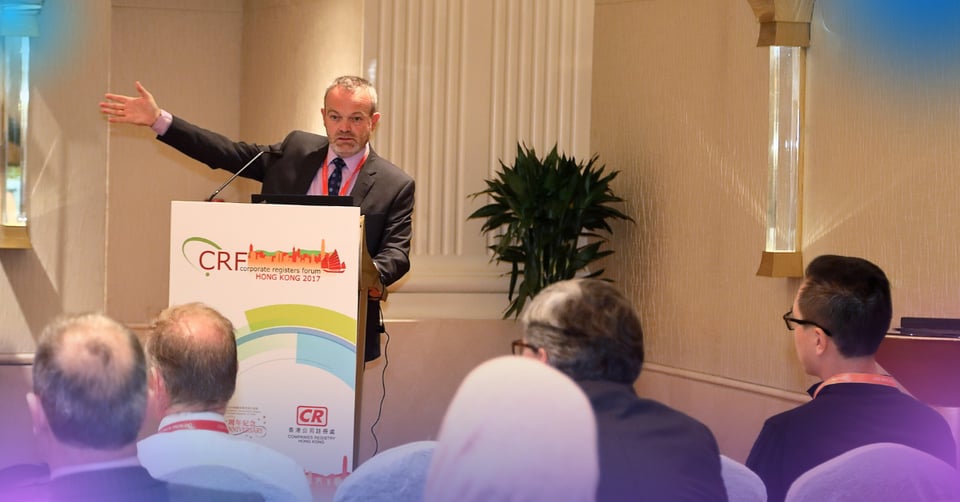 Justin presenting at CRF 2017 in Hong Kong
Changing subjects, you were recently awarded CRF’s first Lifetime Achievement Award at the 2025 conference in Tunisia. How did that feel? Was it expected?
I’m still chuffed. It was very humbling and completely unexpected. I genuinely did not see it coming. I have always seen awards like that as a way of recognising volunteer effort and the collective work people put into organisations like CRF and IACA alongside their day jobs running registries. When Martin Fidler Jones and the CRF board explained that they wanted to recognise the early work and the legacy built by those involved from the very beginning, it really stopped me in my tracks.
You do not think about those things while you are doing the work, you are just focused on moving things forward and helping the community. To be recognised in that way, by peers and friends from around the world, was incredibly special. I was surprised, very chuffed, and genuinely grateful.
You helped create the Corporate Registers Forum. What experiences first showed you the need for a global registry community like CRF?
It all started with my first international work trip to Australia with my boss at the time, Adam Feeley. We went over to see what ASIC were doing and I remember thinking, this is brilliant, we can learn so much from each other. I have always been a big believer in borrowing good ideas wherever you find them, especially from the private sector, and that trip opened my eyes to what was possible if registries actually talked to each other.
That led me to IACA and my first international conference in Santa Fe in 2000, which felt like nerd heaven, 200 people talking passionately about company registers and I thought, I found my people. But it also made me realise there was a gap. There was nothing that really worked for common law jurisdictions, where we were dealing with the same legislation patterns, the same problems, and the same customers. We were getting constant calls from other countries asking how New Zealand had gone online and modernised its law, so we thought, why not bring everyone together in one room?
That was the genesis of what became the Corporate Registers Forum. The first meeting in Auckland was very Kiwi, practical, people focused, and a bit “number eight wire”, but the energy was incredible. We bonded over annual returns and compliance, and from that point on it was obvious there was a real need for a global registry community like CRF.
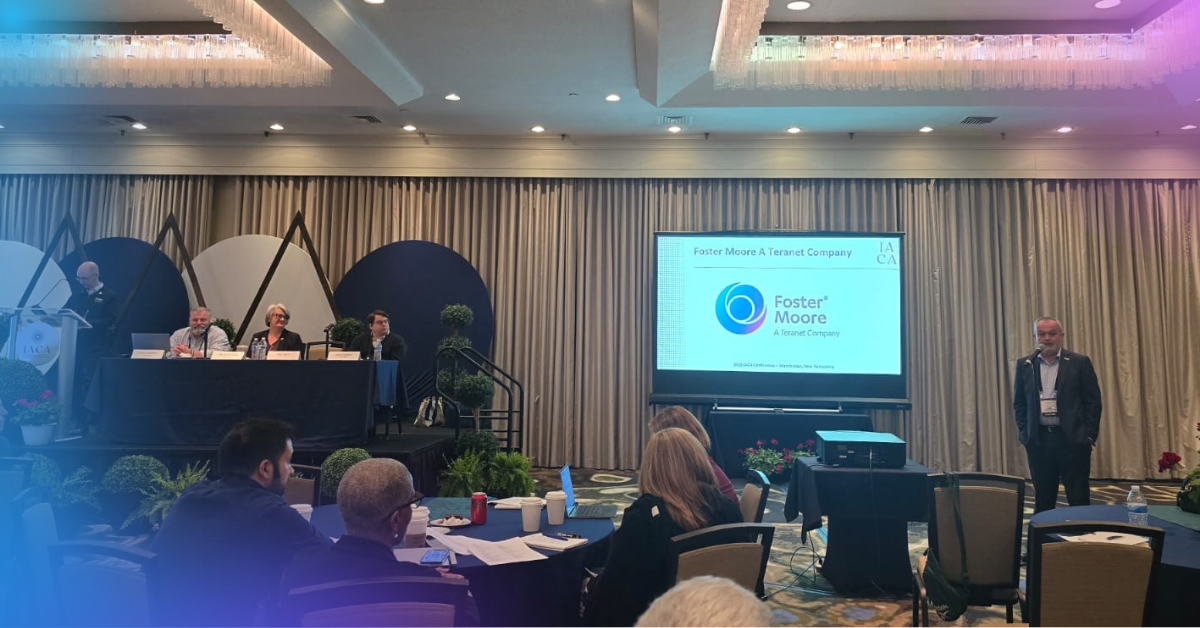
Justin Hygate at the IACA 2025 Conference talking about APIs in registers
I believe you have visited over 60 registries around the world. That’s a lot if you think about it. Why does that matter to you?
Good ideas are everywhere. Visiting registries in person gives you real insight into what works and what does not.
I have physically visited somewhere around 65 registries around the world, actually been there, not just passed through an airport. I have sat with registry teams, watched how they work, and talked through why they do things the way they do. You see ideas that are genuinely smart and worth stealing, and others that make you think, yeah, I would not do that. Both are valuable. It confirms some assumptions, challenges others, and over time you start to see the common threads.
No matter how different the systems or cultures are, registries everywhere are dealing with the same fundamentals around trust, customer service, integrity, and consistency. Seeing that firsthand is incredibly powerful and it is something you just cannot get from papers or conferences alone.
After 40 years, what still excites you about registries?
Registries sit behind everything. Behind every contract, every business arrangement, every exchange of goods and services, there is a search of a company register. That is how economies actually work. Registries are the engine of economic activity, even if most people never see them.
What still excites me is that as we automate them, make them more trusted, and integrate them into wider digital ecosystems, you unlock even more efficiency, more trust, and more value. It reminds me a bit of watching kids grow, every age is a great age for different reasons. Every phase of registry evolution brings something new to learn and improve, whether it is digital identity, verification, or better connectivity.
The registers themselves are not going away. They might become more automated, maybe even close to fully automated one day, but they will still exist. And being part of that ongoing evolution is what keeps it interesting, even after 40 years.
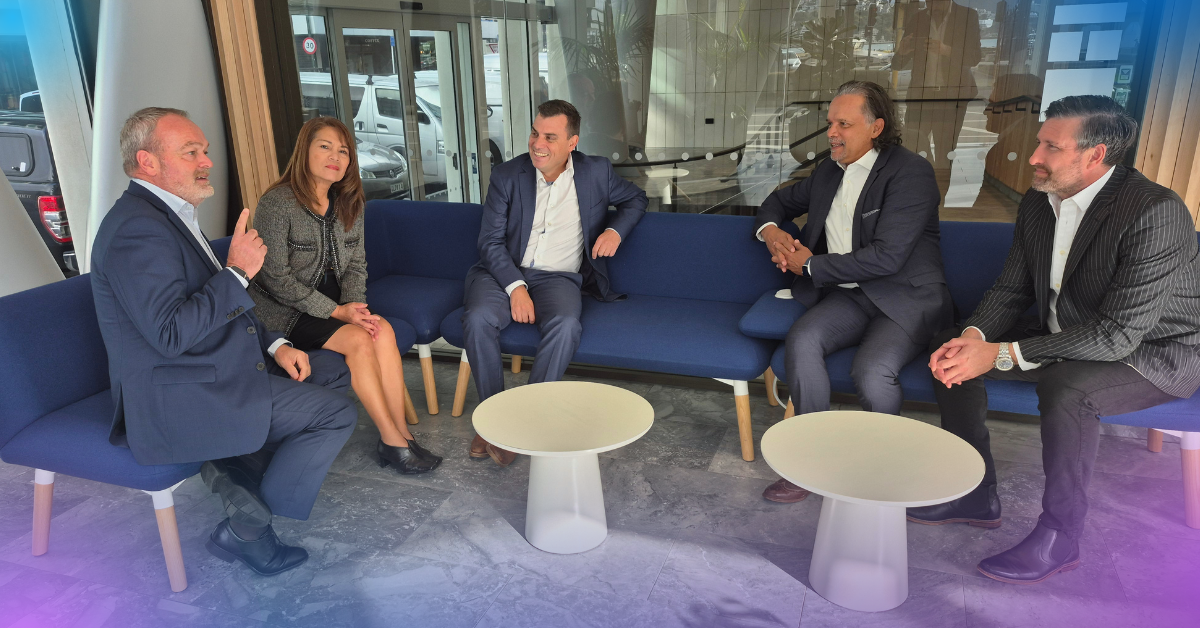
Justin with other members of the Registry Advisory team at a customer workshop in early 2025
What are some of the registry trends you look forward to in 2026?
We are living in very exciting times, where change is happening fast and the impact of those changes is significant. I am really keen to see what becomes possible as registries move further into verification and validation of the information they receive. That includes identity verification of natural persons, but also things like verifying addresses and other key data. As that matures, registers will increasingly be seen as truly authoritative sources of information, which is exactly what they were designed to be.
What do you do to switch off and disconnect from the registry world every now and then?
When I am not watching movies, reading books, walking my beloved dog on the beach, or enthusing about Land Rovers and single malt whisky, I like spending time with family and planning our next adventure. Exploring the many great walks around my city also helps keep me grounded.

Justin Hygate, Vice President of Registry Solutions at Foster Moore, is known globally as The Registry Geek, but his impact goes far beyond the title. For over four decades, he has connected registries, shared ideas freely, and helped build a global community grounded in trust, collaboration, and practical innovation. Through thought leadership, hands-on engagement, and a deep belief in the power of registries, Justin continues to influence registry modernisation around the world, shaping systems that underpin trust, trade, and economic growth.
