
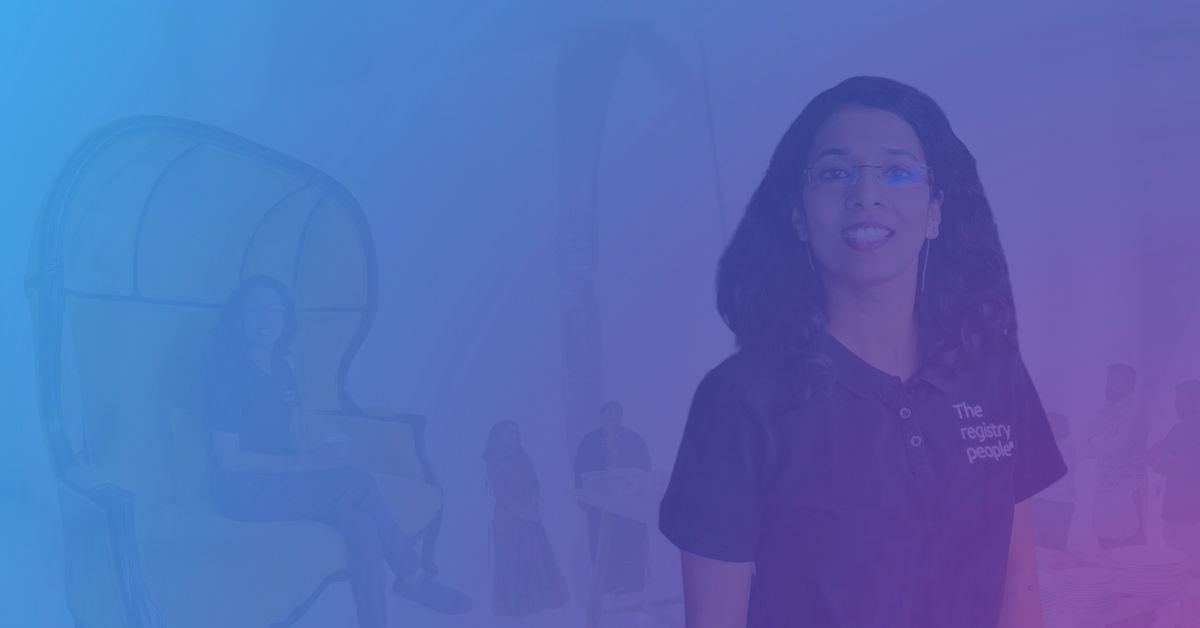
At Foster Moore, behind every system, every registry, and every line of code, there are people whose stories quietly shape the impact we create around the world. Today we meet with Aswathy Sundaresan. Her story is one of curiosity, resilience, and genuine care for people.
She began her journey in a small, self-sustaining farming village in rural India, where problem-solving was part of everyday life. What started as a love for maths and simple, structured thinking grew into a career in technology, and eventually into a leadership role supporting registry systems used by governments and citizens across the globe.
Today, Aswathy leads with the same mindset she developed early on: keep things simple, understand the problem, and focus on the people behind it. That approach has made her not only a trusted leader within Foster Moore, but also someone deeply respected by colleagues and valued by customers around the world.
She is known for her calm thinking in high-pressure situations, her ability to break down complexity into clarity, and her empathy when working with clients who rely on the systems we support every day.
In this conversation, Aswathy shares her journey in her own words, reflecting on where she started, what she has learned along the way, and what continues to inspire her in the work she does today.
Let’s start from the beginning. Tell me about your background in your own words.
I come from a remote farming village in India. It was a self-sustaining farming family, and that is where I was born and brought up. At that time, I thought my path would be either working as a government employee or continuing in agriculture. I did have some interest in agriculture, but one subject I always enjoyed was maths.
Over time, that interest in maths slowly led me towards computers. That is how the transition happened.
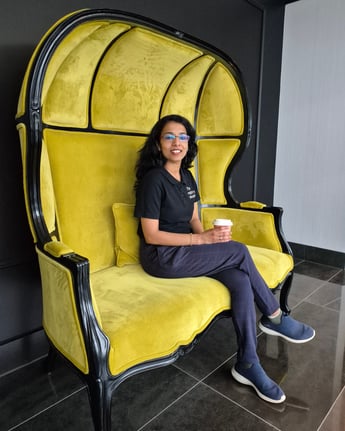 That is a big shift, from farming to mathematics and then computers. What sparked that change?
In farming, we are always solving problems. For anything, we have to take a step back, think carefully, write things down, and follow steps. There is always calculation involved. Even planning for a season means thinking ahead, month by month.
People may see it as knowledge, but for me, it was always computation. That way of thinking stayed with me, and that is how maths became part of my life.
When did you first encounter computers?
It was just before my bachelor’s. My uncle had a computer, and I remember seeing it for the first time. A black screen, blue screen, something happening… but I did not understand what.
When you pressed enter, something happened, and that felt like magic. At that time, I did not understand what happened before pressing enter. But that curiosity stayed with me and made me want to learn more.
You went on to study Mathematics and then a Master’s in Computer Applications. After that, what was your early career like?
I started my career in a startup, and I was the first employee. I was very proud of that. Within a couple of years, the company grew to around twenty people. It was all very exciting.
That experience shaped my professional life. My manager was very detailed-oriented. Even for a single line of code, he would question everything. Why this comma? Why this semicolon? At the time, it felt very strict and difficult. But looking back, that kind of learning was very valuable. Those first couple of years were hard work, but after that, everything became much easier.
You later worked for a much larger global IT services organisation. How was that transition?
Moving from a startup to a company like Infosys was a big change. To be honest, life there felt much easier. The processes were smooth, and I was working with a client like Apple. It was fulfilling. But at that point of my life, I felt I wanted to explore more, see the world, and experience something different.
How did you end up choosing New Zealand?
Before moving, we looked at many possible countries: Canada, the US, the UK, and New Zealand. At that time, New Zealand stood out as a country that was open to skilled migrants and we heard it was beautiful. We did not know anyone here. It was completely new for us. At first it was just me and my in-laws exploring options and we ended up in Hamilton. It was an adventure.
What drew you to Foster Moore specifically?
Initially, I was looking at government roles. While exploring, I came across MBIE, and from there, somehow, I found Foster Moore.
What really stood out was that instead of working for one government, Foster Moore supports many governments across the world. I remember seeing the map with connections across countries. That really stayed with me. It was impressive. It felt like discovering the world from one place.
Did you know what a registry was before joining?
No, not at all. I only had a basic idea that governments handle applications and legal processes. I wasn’t even familiar with the term “compliance.” After joining, I started understanding how important compliance is, and how both individuals and businesses need to follow certain rules depending on the jurisdiction where they operate.
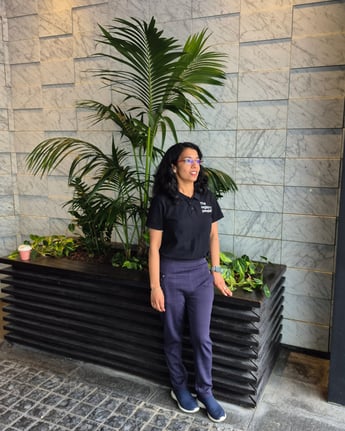 What makes working in registries unique compared to other areas of technology?
One simple thing: impact.
Sometimes, as a developer, you might think you are making a very small change, like a label or a button. But that small change can affect someone somewhere else in a very real way. It could be a person running a small business, trying to complete a process.
Suddenly you are fixing an issue that meant a big deal to them. That is something I really understood after working in support. Even a small step can have a very big impact on someone’s life.
Can you share a memorable moment from your time at Foster Moore?
I have many moments I remember. One example is the positive feedback I received when working with Papua New Guinea on their business register. During a discussion, I suggested a solution, and they loved my thinking and asked me where I was all this time.
Another important moment for me was working in Montana. I was the last Foster Moore employee to leave that project. That gave me a strong sense of ownership and connection. But overall, what stands out the most is always the people I worked with through the years.
You once described your role as being like a general surgeon in an emergency department. Why?
Because in support, problems come to you as emergencies. Sometimes, someone is stuck at a critical moment, and they need a solution immediately. In those situations, we have to act quickly.
To act, we need knowledge and critical thinking. First, we provide a short-term fix, like stopping the bleeding. Then we work on the long-term solution to fix the root cause. That is how I see the role.
How do you balance quick fixes with long-term solutions?
It always depends on the impact and the situation. We need to assess who is affected, what is the urgency, etc
In most decisions that are time-critical we provide an immediate solution but continue to think about how to procure that permanent fix at the same time so that the problem does not return. Our job is to present the available options to our clients in a way they can understand the impact and requirements for them to make an informed decision.
What is a lesson you have learned from working with different governments and clients?
One important lesson is that what we think is important is not always what the client actually needs. So first, we have to listen. Really listen and understand the users and their situation. That is the key to everything. Then we have to stay customer-focused and keep things simple.
Break problems into smaller parts, think clearly, and focus on the impact. Because in the end, we are not building solutions for technical people only, we are building for everyday users. If we understand that well, we can deliver something that truly helps.
What technology trends excite you in the registry space?
For me, it is really about how we use data better. Data is always the source of truth in registries. But now, it is not just about storing data, it is about understanding it.
What excites me is enhanced data analysis and trend analysis. If we can look at patterns, understand behaviour, and see how things are changing over time, that gives real value to our clients.
It helps with better decision-making, better planning, and even predicting future needs. So, for me, any technology that helps us analyse data more clearly, faster, and in a meaningful way… that is where I see the biggest opportunity.
How do you see AI changing support and operations?
AI will definitely help us and will change how we operate, but I can tell you one thing that I believe will never change: there will always be a human element in what we do.
AI can suggest solutions, but the final decision should still come from a person. Human judgment, empathy, and understanding are very important in our field of work.
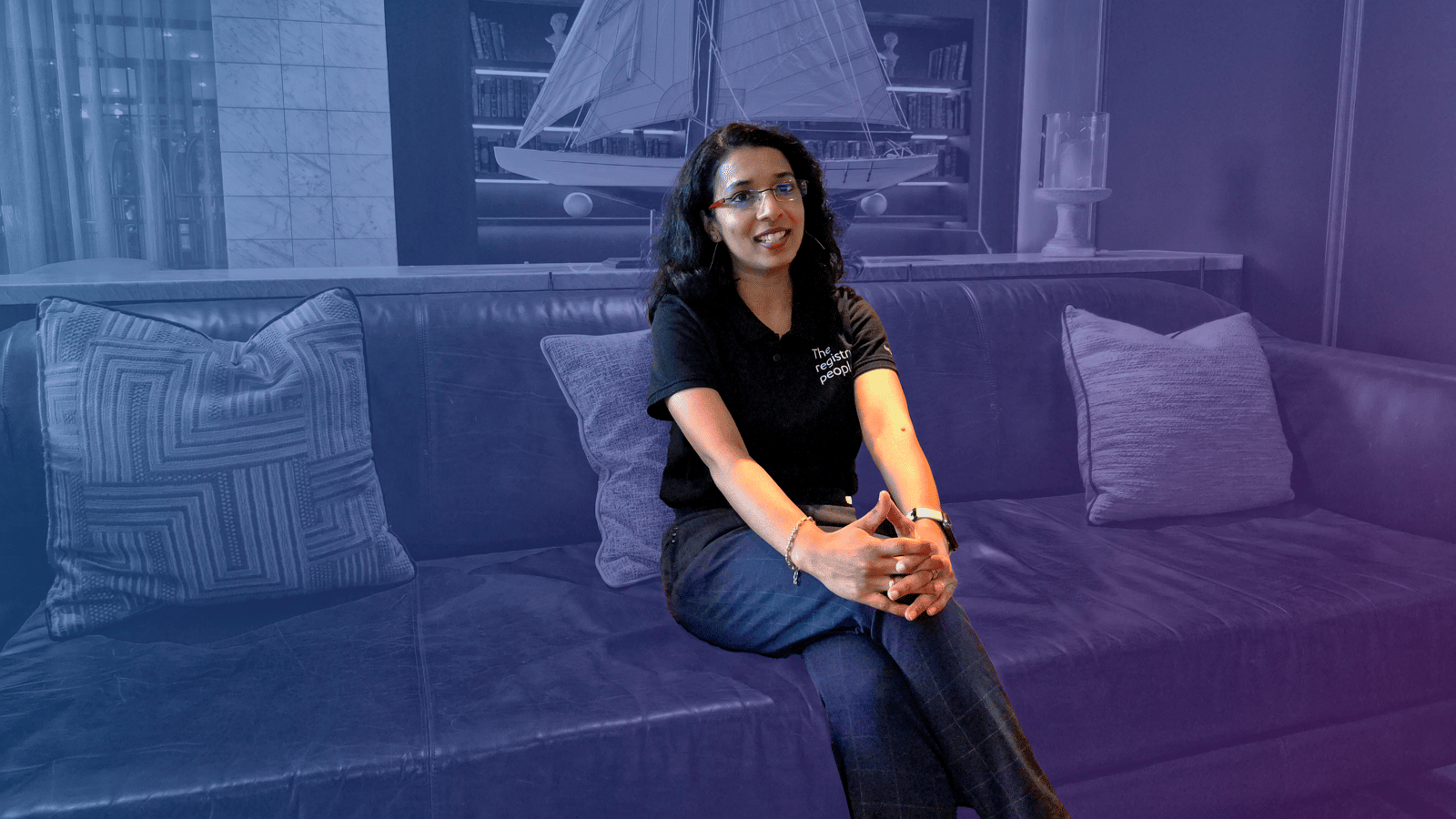
After nearly 10 years, what does being a “registry person” mean to you?
For me, it means continuous learning and constant challenge.
I have realised that this space never stays the same. There is always something new to understand, a new problem to solve, or a different situation to handle. That is something I really value.
I do not enjoy repetition. I like variety, and in this role, every day brings something different. No two problems are the same, and that keeps me thinking and learning all the time.
At the same time, it is not just about solving technical issues. It is about understanding the impact of what we do on real people. Even a small change can make a big difference in someone’s life.
It can be tiring at times, but it keeps me engaged, motivated, and always growing. That is what being a registry person means to me.
What is the best part of working at Foster Moore?
For me, it is the people and the culture around them. Everyone is approachable, and that makes a big difference in day-to-day work. I can go to anyone and ask for help, even if it is just five minutes, and they are always willing to support.
That kind of environment builds trust and confidence. You feel comfortable asking questions, sharing ideas, and learning from others. It is not just about getting the work done, it is about how we support each other while doing it. That culture of being open, helpful, and approachable has played a big role in my journey, and it is something I value a lot.
Is there anything else you would like to share?
The people around me have played a big role in my journey and I would like to thank them. My managers and colleagues saw potential in me that I did not always see myself. I specially want to thank Lukas Rossa, James Campbell and Leon Smith, they helped me learn, improve, grow, to become the person I am today. They supported me and pushed me forward, and I am very grateful to them for that.
From a small farming village to leading global support teams, Aswathy’s journey is built on curiosity, resilience, and a genuine commitment to helping others. Through her work, she has helped shape systems that support thousands of people around the world. But just as importantly, she has built strong relationships, earned trust, and created a positive impact on those around her.
We’ll leave you with one of her quotes on how she approaches her work:
“Take pride even in the smallest improvement, it can have a huge impact down the line.”
--
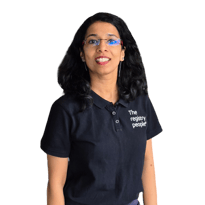
Aswathy Sundaresan is a Technical and Application Support Manager at Foster Moore, where she leads global support operations with a strong focus on customer-centric delivery and continuous improvement. Known for her calm approach, her willingness to help, and her ability to turn complex challenges into simple, meaningful solutions, she plays a critical role in ensuring registry systems run smoothly for governments and users around the world.
Subscribe to our newsletter to read more Registry People profiles and expert perspectives from across the global registry community.