
When we think about corporate registers today, we tend to associate them with companies, shareholders, directors, and filings. But the idea of systematic registration did not begin with companies at all. It began with states trying to govern complex economies.
The earliest known example of this is Ancient Egypt, a civilisation that built one of the most sophisticated administrative systems of the ancient world. Long before corporations existed, Egypt had already mastered population records, land registers, tax assessments, and occupational control. In many ways, Egypt represents the starting point of the registry story.
A Registry-Driven State Before Commerce
Ancient Egypt did not have private companies in the modern sense. Economic life was dominated by the state, the pharaoh, and temple institutions. Yet managing a civilisation that stretched hundreds of kilometres along the Nile required something fundamental: accurate records.
Every harvest, flood, labour project, and tax obligation depended on knowing who lived where, who worked in which occupation, who owned or controlled land, and how much tax was owed and in what form.
This necessity gave rise to some of the earliest known registry systems in human history.
The Tools That Powered Egypt’s Early Registers
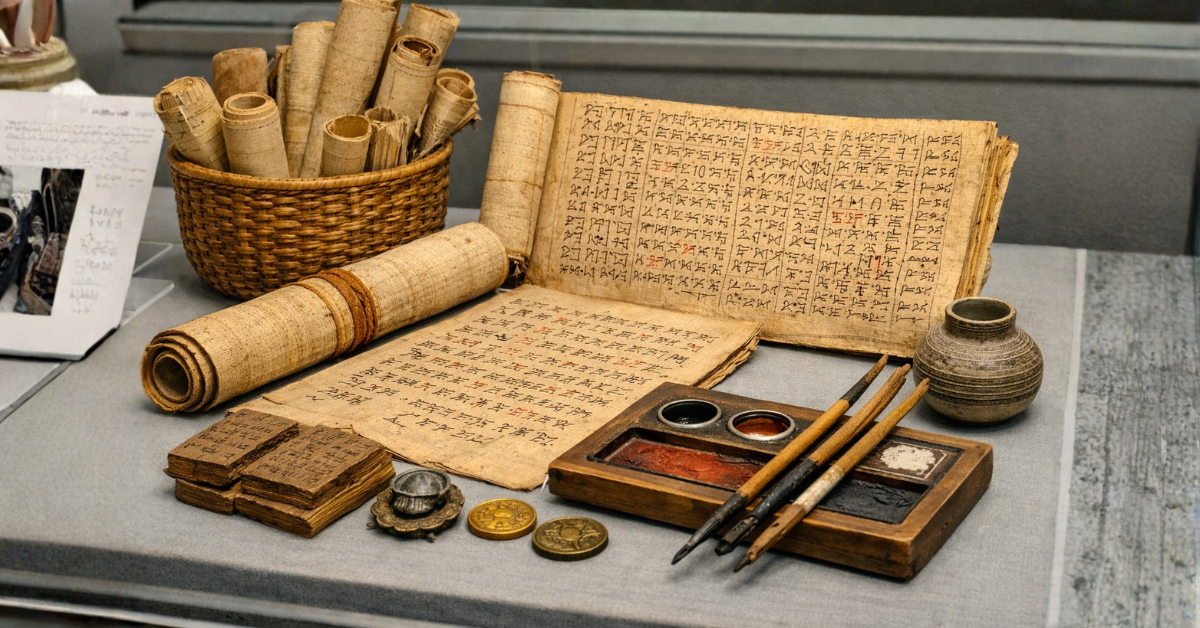
The effectiveness of Ancient Egypt’s registry systems depended not only on what was recorded, but on the tools and methods used to maintain those records over centuries. These tools formed the practical foundation of one of the world’s earliest administrative states.
At the centre of this system was papyrus, the primary medium for official documentation. Papyrus scrolls were used to record censuses, land surveys, tax assessments, labour allocations, legal decisions, and granary inventories. Their relative durability and portability allowed records to be stored, transported, updated, and referenced across administrative centres along the Nile.
Supporting these written records was a highly standardised approach to measurement. Surveyors relied on measuring rods and knotted ropes to re-establish land boundaries after the annual Nile floods. This was essential for maintaining accurate land registers and ensuring that tax obligations remained consistent from year to year. Agricultural output, particularly grain, was measured using agreed units, allowing quantities owed, stored, or distributed to be precisely recorded.
The system was operated by a professional class of scribes, whose role went far beyond writing. Scribes were trained in accounting, geometry, legal conventions, and administrative protocols. Their education ensured consistency in record formats, terminology, and calculations, enabling registers to be maintained and interpreted across generations. In effect, scribes functioned as the first registry officials, responsible for data integrity and continuity.
Records were housed within temples, granaries, and administrative offices, which acted as early data centres. These locations allowed written registers to be cross-checked against physical realities such as land, harvest yields, stored goods, and labour attendance. Officials regularly compared recorded data with observed outcomes, creating an early form of verification and audit.
Together, papyrus documentation, measurement tools, trained scribes, and structured archives formed a complete registry ecosystem. This combination allowed Ancient Egypt to govern its economy, workforce, and resources at scale, demonstrating that long before companies existed, effective administration depended on reliable tools for recording, storing, and validating information.
The Main Registers of the Egyptian State
Population and Labour Censuses
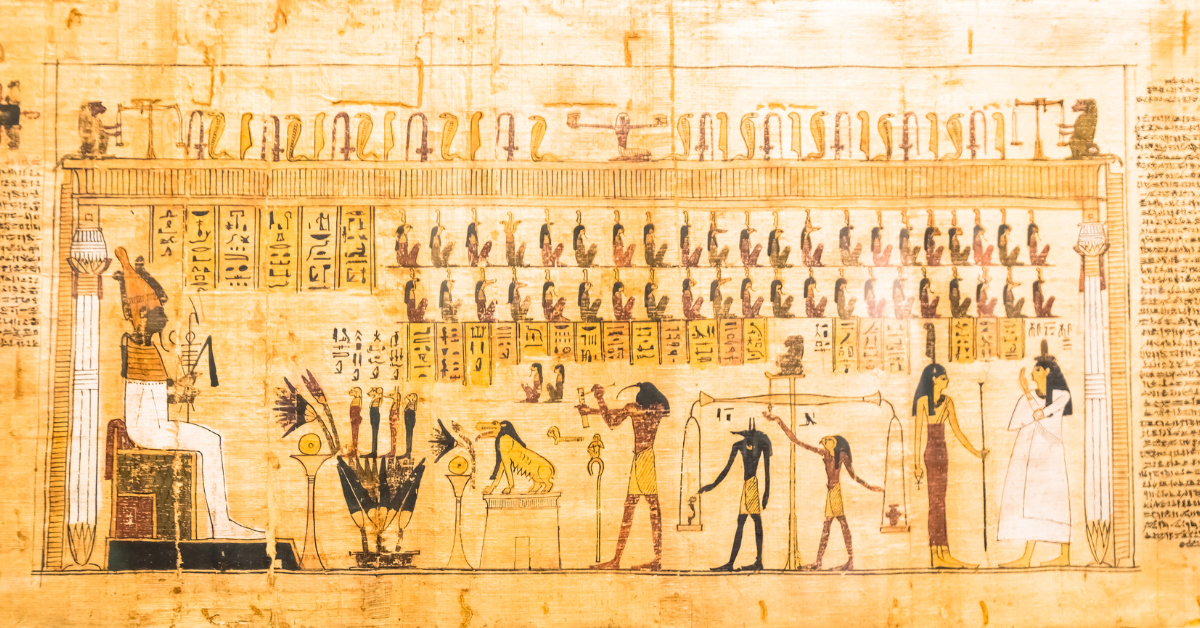
Ancient Egypt maintained regular population and labour censuses that recorded households, family members, occupations, skills, available labour, and livestock holdings. These records were practical instruments of governance rather than symbolic counts, allowing the state to understand the human and economic resources under its control. By linking people to professions and locations, census records enabled the allocation of corvée labour, the planning of agricultural cycles, and the mobilisation of large workforces for state projects such as temples, tombs, and infrastructure. In effect, these censuses functioned as early population and workforce registers, underpinning Egypt’s ability to govern and plan at scale.
Occupational Registers and Proto-Licensing
Although Ancient Egypt had no private companies, it exercised strict control over occupations through what can best be described as proto-licensing systems. Professional roles were often hereditary, and access to skilled trades such as scribes, artisans, and priests was tightly regulated. Workers were formally attached to temples, royal workshops, or state projects, and their training, status, and authority were officially recognised. Scribes, in particular, formed an elite professional class whose entry required education, testing, and state approval. These occupational records ensured that critical functions were performed by trusted individuals, establishing reliability and accountability long before modern professional licensing existed.
Labour Registers and Workforce Management Records
Egypt also maintained detailed labour registers to manage large and specialised workforces. Surviving records from places such as Deir el-Medina, the settlement of royal tomb workers, show named individuals and teams, track attendance and absences, document rations issued in bread and beer, and record work output and disputes. These records allowed administrators to monitor productivity, resolve conflicts, and ensure the steady progress of complex projects. Functionally, they resemble modern employment registers and payroll systems, highlighting how advanced Egypt’s approach to workforce management was for its time.
Land and Tax Registers
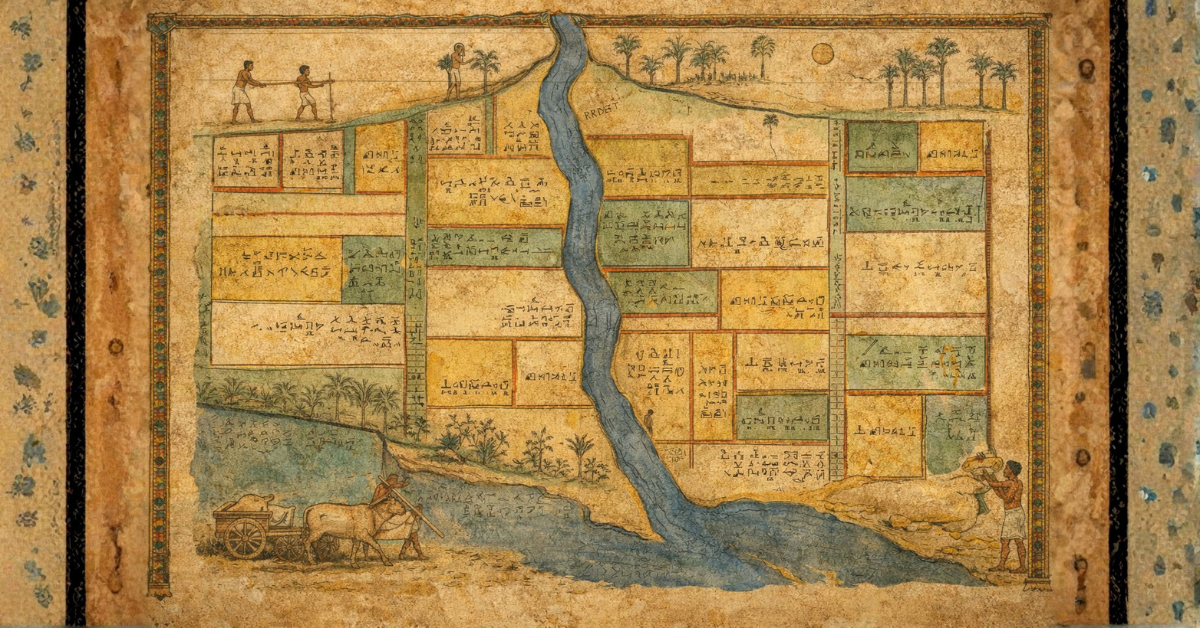
Land and tax registers formed the backbone of Egypt’s fiscal system. Agriculture was central to the economy, and taxes were primarily paid in kind, especially grain. Because the Nile flooded annually and reshaped field boundaries, land had to be re-measured and re-registered on a regular basis. These registers recorded individual plots of land, identified landholders and institutional owners such as temples and state officials, and linked each parcel directly to its tax obligations. The Wilbour Papyrus, dating to around 1147 BCE, provides a clear example of this system in action and demonstrates how Egypt used detailed land records to recalculate taxes annually, making it one of the earliest examples of data-driven fiscal administration.
The Key Lesson: Registers Come Before Companies
Ancient Egypt proves a critical point: registers emerge from taxation and control, not commerce.
Long before markets required transparency, states required visibility, and long before investors needed protection, governments needed certainty. The tools created to manage land, labour, and taxes became the ancestors of modern registries.
The Egyptian experience demonstrates that registries are, at their core, instruments of transparency, visibility, coordination, and trust. By mastering record-keeping early, the state was able to govern resources, labour, and taxation with precision. That same logic continues to define the role of registers in the modern world.
Egypt Is the Start of the "Age of Registers" Series
Egypt is not just the first chapter chronologically. It is the conceptual foundation of the series of 12 posts.
Egyptian record-keeping shows us that complex societies cannot function without records, that data quality and accuracy are key to thriving states or economies, and that registries evolve alongside society and governance.
In the next article in this series, we move from state control to market activity, exploring how Ancient Greece introduced commerce, licensing, and public accountability into the story of registration.
At Foster Moore, we build modern registry systems, but their roots stretch back over 5,000 years. Understanding that history helps us design better, more resilient registers for the future.